
MY INTERNSHIP SUMMARY - AUNI, OCT 2025
INTRODUCTION
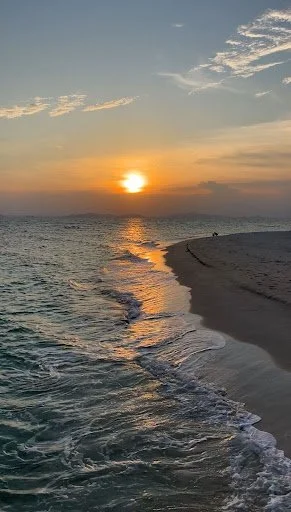
Less than a week left and in every step I take, I find myself capturing every gaze I took on every inch of this island. Deep down, I know living here has been a privilege — a chance of living my answered prayers for almost eight months. That was quite a long time hence explaining the degree of attachment I had to this place. Rather I wouldn’t call it an attachment — more to a footprint of my youth, a collection of thousand memories in my chapter of life. A collection of memories that witness my growth professionally and individually.
ISLAND LIFE
Living on an island, seeing the same familiar faces every single day for almost 8 months at work, during meals, even on quiet evenings — honestly scared me at first. You can’t really pretend here; because sooner or later, people will start seeing the real you. But somewhere along the way, that fear turned into comfort. These limited spaces became our little world filled with genuine laughter, vulnerable moments, and new adventures we never thought we’d try.
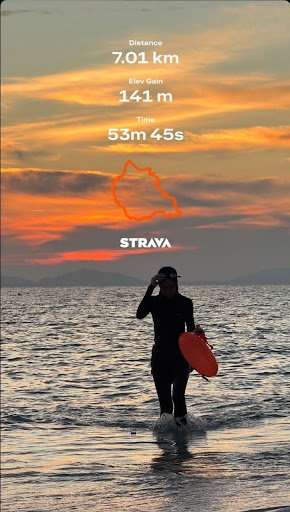
I still can’t believe I hit my first 15 km run and swam my first 1.5 km open water here. Things I never imagined I could achieve, yet somehow, this island made it possible. And now, it’s become a small tradition for us — every time we’re out to Mersing, we go for a night run with our all girls and an Aiman little squad, the chaotic. I’ll miss that.

UNDERWATER ADVENTURES
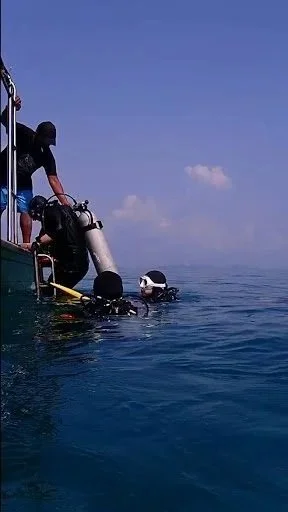
To be honest, one of the greatest adventures during my internship here was definitely the diving part. I’ve mentioned in my first blog how mastering our diving skills felt like a journey of self-discovery — and it truly was. All thanks to our amazing divemaster, Aiman. As fierce as he could be when it came to diving (trust me, that was his most serious and fierce mode), it was that very toughness that helped me — well, at least me, I can’t speak for others — grow so much in this skill.
And it wasn’t just that — I think most of us have now been trained to conduct scientific dives smoothly. It’s the kind of opportunity you rarely get elsewhere, especially in diving. From seagrass surveys (where I most of the times struggled to remember where to place the plot), to the little passive-aggressive “conversations” we had underwater, to the reef check surveys where we all secretly had our own preferences for which task we wanted — every bit of it created such unforgettable memories. Those moments not only strengthened our skills but also made the experience so uniquely ours.
MY TURTLE CHAPTERS
The main character of the Tengah Island team — the Turtle. I still remember a late-night question that possibly struck every turtle conservationist at least once: “Why do we choose to save turtles?” It left me unhinged for a second. Is it because they’re cute? Or because, out of all endangered species, we somehow decided they’re worth saving? Maybe both — but also so much more.
Scientifically, turtles are keystone species that keep our oceans alive — green turtles grazing seagrass beds, hawksbills balancing coral reefs. Their migration across oceans makes their survival a global effort. But beyond the science, turtles are also symbols of resilience — ancient travelers that have outlived dinosaurs, carrying quiet wisdom through the tides. Maybe that’s why we choose them. Saving turtles isn’t just about saving a species; it’s about protecting the ocean that sustains us all. Plus, unlike many deep-sea creatures, turtles are visible and relatable — we see them, occasionally dive with them, and share the same beaches they return to. Their presence connects people to the ocean in a tangible way, making them the perfect flagship species to represent broader marine conservation efforts.
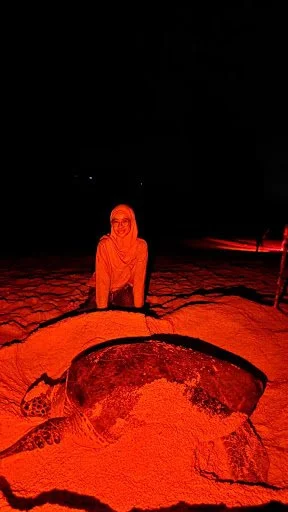
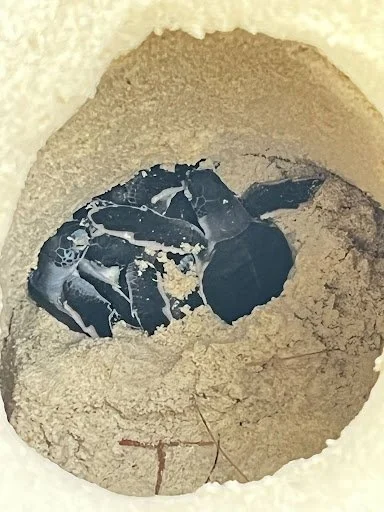
From taking turns patrolling every morning, swimming to the beaches on low tides day, to almost two hours locating the nest chamber, to carefully relocating eggs, waiting patiently for over two months, and finally watching the hatchlings make their way to the ocean — every effort and step was a lesson, a story, and an experience I’ll never forget. Those sleepless nights during the peak season — taking turns for night patrols, waiting for the mothers to return, and watching nests take turns hatching. The excitement of waiting for our first nest to emerge still lives vividly in my mind. Eventually, when we had too many nests to keep track of their 50-day mark, I even created our own hatchery due tracker (a small thing, but one I’m genuinely proud of). If I were to write down every recollection of turtle-related memories from this internship, it would fill endless pages — probably turning into a very sentimental turtle novel.
WHAT MARINE DEBRIS TAUGHT ME ABOUT US
I've shared my perspective and thoughts on marine debris quite extensively in my first blog. And after spending a few more months here, the realization never stops but it grows to a greater dimension, expanding into bigger questions.
Here’s a truth I'm not embarrassed to admit, doing anything related to marine debris, be it marine debris hotspot survey, beach cleanups, or marine debris sorting sessions, was honestly one of our least favorite activities. Because let’s be brutally honest here, no one truly enjoys collecting trash under the blazing sun, especially on days when the stench is overwhelming and we find ourselves sorting through things we wish we hadn’t seen. Some days, it got so bad we even lost our appetite. Even if we were fairly paid, I bet most of us would still try to opt out.
But that’s not the story I want to highlight. What mattered more to me was what came after those long, sweaty cleanup sessions — the quiet moments when I started to wonder what the real solution could be. We often say plastic is the big issue, but as we sorted through piles of debris, it became clear that it was more than just plastic. What we were really staring at was the reflection of our overconsumption lifestyle.
I remember picking up still-good shoes, half-broken toys, and clothes that could’ve easily been reused, and I couldn’t help but ask myself — why did we throw these away? Why do we always reach for plastic without a second thought? The answer is painfully simple: convenience. It’s convenient to buy a new pair of sandals while traveling instead of bringing one. It’s convenient to buy food wrapped in plastic and toss it away rather than carry our own container. It’s convenient to chase trends and buy new things just to feel updated, even when what we already have still works fine.
The truth is, we’ve outsourced our sense of responsibility. We trust that the government or some private sector will deal with our waste for us. But take Japan, for example — a country where waste separation goes far beyond just “recyclable” and “non-recyclable.” Residents there sort their trash meticulously, and failing to do so means it won’t even be collected. That level of discipline doesn’t happen overnight; it’s the result of years of education and community integrity.
Still, we don’t have to wait for our own government to adopt that system. Change can start small — right here, with us. Bringing our own containers when buying food from street stalls. Choosing products with less plastic packaging. Thinking twice before buying something new when what we already have still serves its purpose.
If each of us makes even a small effort, those ripples of change will eventually turn into waves that are strong enough to shift mindsets, habits, and maybe even the system itself.
COLLECTIVE EFFORTS OF TIC
After almost eight months of interning here, one thing I’m deeply grateful for and constantly inspired by is TIC’s collective dedication to conservation. What began as a mission to protect sea turtles has now evolved into something far greater, expanding to include their habitats, foraging grounds, and nesting areas, with the help of advanced technologies like drones and ROVs.
What makes it even more meaningful is how our team focuses on providing the data that drives real action. TIC doesn’t stop at research, they translate it into impact by working hand in hand with local communities, encouraging and guiding them through examples on how to live sustainably. I find that truly admirable, because fostering a genuine sense of ownership among locals is, in the long run, the most effective way to sustain conservation practices. Officers, interns, and volunteers may come and go, but the locals remain and they are indeed the true stewards of these islands.
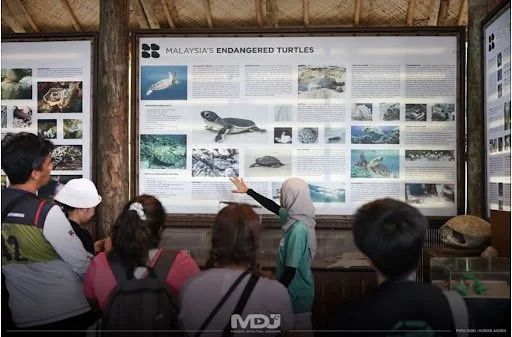
Seeing Batu Batu Resort support TIC for almost a decade now stands as a remarkable ESG success story. While many conservation efforts depend heavily on external funding, Batu Batu has been our main corporate partner throughout this journey, making everything we have achieved today possible. It’s inspiring to see a business that passionately cares about the environment and defines profit not just in monetary terms, but in the health and longevity of nature itself. After all, nature protects the island in its own way, and our efforts, in turn, serve as a long-term form of future risk management. It’s a beautiful relationship of mutualism, where both sides thrive together.
FAREWELL
As this chapter comes to a close, my heart is full of gratitude for every person who filled my eight-month journey here with warmth, laughter, tears and colors.